
About the Artist
From the Realm of Numbers to the Realm of Color: Frank Nitsche’s Transition from Science to Art
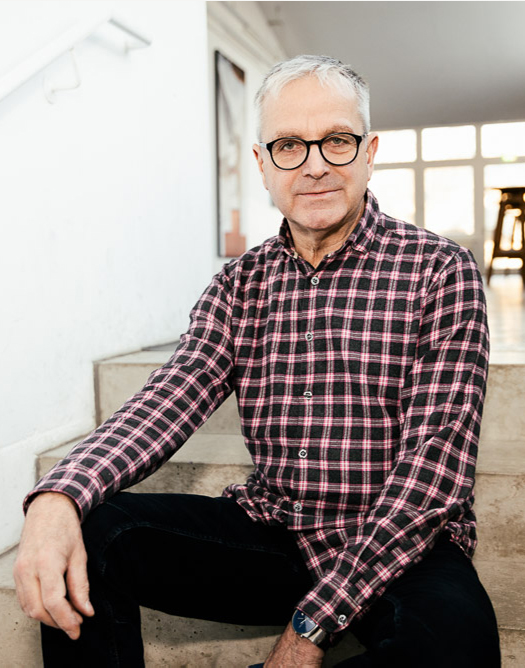
Frank Nitsche in his studio 2008 | Photo Michael Uhlmann
Biography
As a child, Frank Nitsche found drawing to be a place where the world became easy. But the GDR initially steered him in a different direction: mathematics and physics. He took two state examinations and taught these subjects for two decades—numbers instead of colors. The quiet alternative remained: in the “interstitial space,” he met the artist Paul Otto Knust, who became his mentor and father figure and finally opened the door to painting.
Studio instead of classroom
At the age of 41, Nitsche took the logical step, turned his life around once again, and went to Burg Giebichenstein (art education), while also attending HGB Leipzig as a guest student – studio instead of classroom, pictures instead of formulas.
Work process
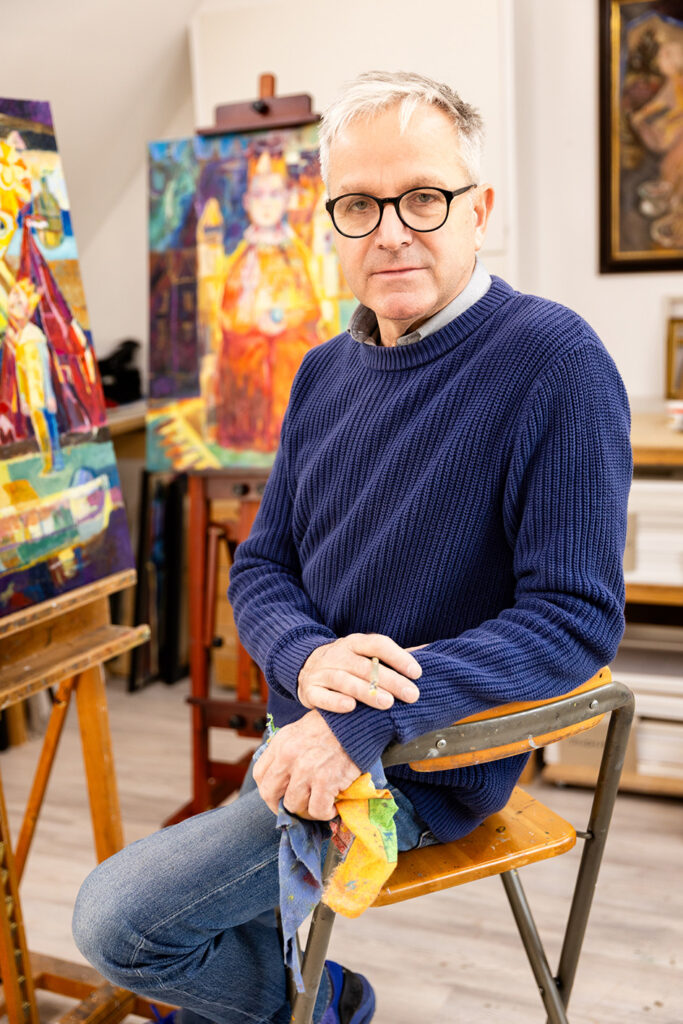
His works are created slowly, in layers, often over years. Oil paints are applied, left to dry completely, sanded down, and reworked; old paint residues flicker, bringing memories into the present and giving the surface a patina. The free interplay of color, form, and controlled chance condenses into pictorial spaces that unfold an inner logic: a stream of light and movement that seems to glow from within—painting as a “topography of layers.”
Recognition
Recognition and sales have been growing steadily for years; much of his work goes directly “from the easel” to collectors. Since 2025, his work has also been receiving a noticeable response in the digital realm—especially from artists, curators, and galleries. He has a loyal fan base on Instagram. This has led to the next step: further developing thematic series, expanding his gallery presence nationally and internationally, and deepening sustainable relationships with collectors—painting as a lasting value, not a fleeting effect.
Between Aschersleben and Ahrenshoop
Frank Nitsche, born in Eisleben in 1958, lives and works in Aschersleben (Saxony-Anhalt) and in the artists’ village of Ahrenshoop, his second home. Since he began his studies in 1999, his studio has been the center of his life—a quiet, bright room where pictures grow. Supported by his family and a long career as an art teacher (including founding the Kreativwerkstatt Aschersleben), he continues today what began in his childhood: he makes visible what lies beneath the surface – layer by layer, light from depth.
Artist Statement
Children's Land Reloaded: Joy that doesn't displace seriousness
Motivation
“I paint out of the belief that the world—despite its rough edges—is a place of color, light, and lightness.” This attitude toward life becomes a stage in my paintings: light meets movement, shapes dissolve, are permeated by brightness, and come together again in play. The result is not a static image, but a dialogue of rhythm, color, and tempo—a play of light that makes the pulse of life palpable.”
Cheerfulness with depth
“For me, cheerfulness is not an evasion, but an attitude. I stage light and color in such a way that, alongside the brilliance, the fall height always remains visible. Behind the playful surface, the human aspect appears: memory, longing, vulnerability. The lightness does not take away the crack—it illuminates it. This creates spaces where you can smile and reflect at the same time.”
Children’s land
“Childhood is a recurring motif. It stands for free, creative play and for rules, expectations, and excessive demands. In my work, I build myself a children’s land in which I am king, jester, and sailor all at once—ruler, dreamer, explorer. These roles allow me to question my own history and bring back the wonder I have lost.”
Children’s Land
“Childhood is a recurring motif. It stands for free, creative play and for rules, expectations, and excessive demands. In my work, I build myself a children’s land where I am king, jester, and sailor all at once—ruler, dreamer, explorer. These roles allow me to question my own history and bring back the wonder I have lost.”
Painting style
“Stylistically, I move freely between cubism, expressionism, abstraction, and surrealism. Lines are broken down and rearranged, surfaces tilted, perspectives shifted. Color is my main protagonist; the image emerges from play—and truth is revealed in play.
My paintings invite you to immerse yourself, let yourself be carried away, and return with a trace of hope. I believe in art that encourages courage: lightness without repression, cheerfulness with depth. When a painting opens your inner gaze and at the same time makes the arena of life appear brighter, it has achieved its goal – more honest, more free, more human.”
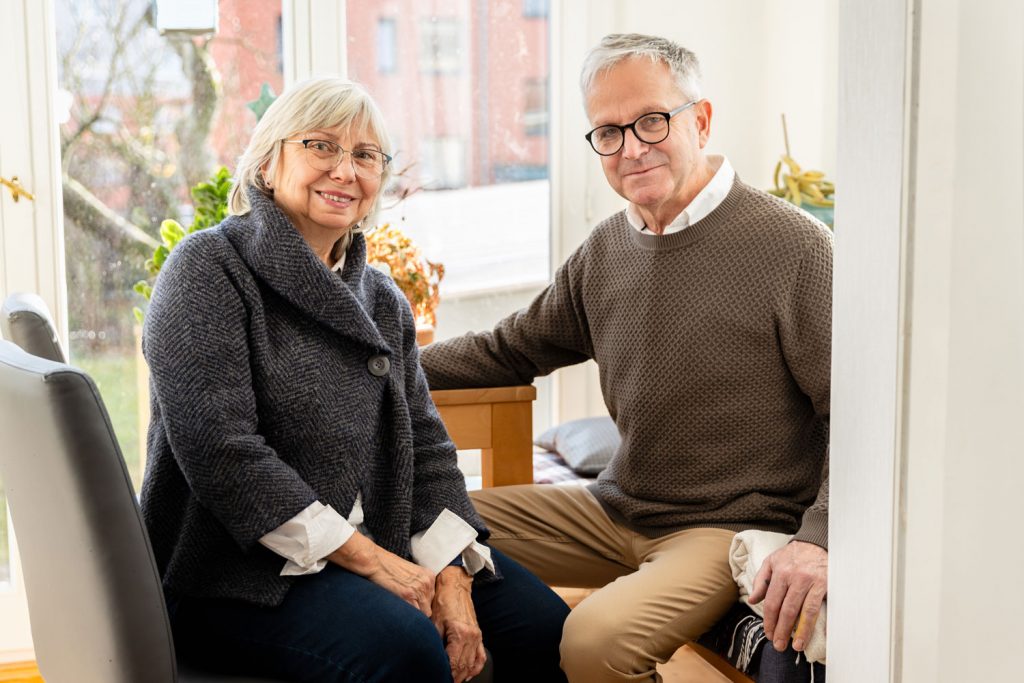
“My wife Dietlind, to whom I have been happily married for many years, is an integral part of my life. Together with our two sons, their partners, and our four grandchildren, she forms the stable foundation that supports and strengthens me.
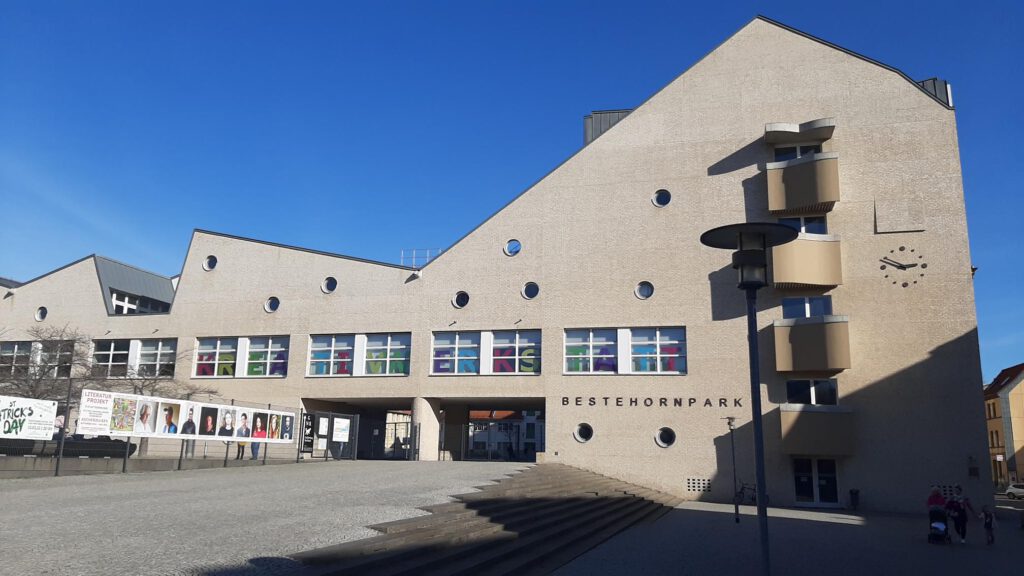
I spent the majority of my professional life passionately teaching art at a high school, where I had the privilege of shaping the careers of numerous young artists. In 2010, I founded the Kreativwerkstatt Aschersleben – a youth art school that remains particularly close to my heart. Even though I am no longer at the forefront of daily operations, I continue to support the institution as a consultant, graphic designer, and educator.
I consider the Kreativwerkstatt, Workshops for Art and Science Aschersleben, an important part of my life’s work, and I am committed to ensuring its continued existence as long as my strength allows.”